America is once again in crisis! All three branches of its government and its major political parties are controlled by a plutocracy composed of large corporations and the wealthy elite. Irrespective of the candidates they elect, the voters are neither represented nor protected. Every American is at great risk, not only for their freedoms, but for the very safety and well being of their families and for the future of their children.
Individual voters are the essential element of every democracy. Their effectiveness and the power they exercise determine the quality and extent of the freedoms they enjoy and the protection of the government they employ.
U.S. voters appear to be increasingly powerless to fight the plutocracy which runs their government. As a result, Americans are living in an ever more repressive police state that is illegally committing acts of violent aggression around the world.
The only thing that can possibly transform the U.S. government to one that cares for the voters who elect it, rather than for the plutocracy that controls it, is a unified opposition by all of the People, irrespective of their social class or political beliefs. The energy driving such a mass movement must flow from the personal actions taken by each of its individual participants.
The existing political situation in the United States can be compared to that of India prior to its independence. There the people were ruled by a foreign country, and in the U.S. the people are ruled by a government controlled by a plutocracy of privilege. As in India, the U.S. government has little care or concern for the people who contribute their hard-earned taxes to support it and the lives of their young people to defend it.
Mahatma Gandhi, the Father of India, led a mass movement of nonviolent civil disobedience participated in by Indians of every class, religion and political party for more than 30 years until they forced the granting of independence in 1947.
Gandhi repeatedly demonstrated the collective power of individual actions, such as the refusal to purchase government-controlled salt and the march to the sea by hundreds of thousands to gather their own salt.
All Americans, irrespective of social class, religion or political party, are being cynically manipulated by an unaccountable plutocracy which turns one against the other. Once they come to realize this, they will find the courage and the ability to reverse the power structure and to transform their government into one which is concerned about their welfare and that of their families.
The People are not unaware of the crisis. Republicans and Libertarians are alarmed by the massive federal budget deficits, and Democrats and Greens are concerned about cuts in health, education and social programs. All are worried about government intrusion into their privacy, the curtailment of their civil rights, corporate personhood, and unfair taxation.
Political activity is rampant on the right, left and the middle, with hundreds of organizations taking aim at one or another of the issues that most concern them; however, there is no single focus to unify all elements of political activism into an effective defensive force which will ultimately provide a political mechanism to peacefully resolve everyone’s concerns.
Gandhi taught that people have the right to defend themselves when their lives are threatened, but he also believed nonviolent civil disobedience was the most effective defense of freedom.
As in India, the power of a mass movement of Americans will be an aggregation of the basic strength of each individual participant, and their vote is the only effective, nonviolent power that every individual citizen possesses and controls.
The faceless plutocracy that controls the U.S. government promotes an illusion of legitimacy by allowing the people to vote for a variety of political candidates, the majority of whom have been bought and paid for by the plutocracy. The fiction extends to the “independent” judiciary, whose members are carefully selected by the plutocracy and who promote its agenda.
Gandhi recognized that “A government builds its prestige upon the apparently voluntary association of the governed.” Thus, the legitimacy required by the plutocracy to remain in power depends upon misleading voters to vote against their interest. This leaves alarmed and informed American voters with two choices: They can either refuse to vote or figure out a way to make their vote count.
Already, more than half of all qualified voters do not vote, which makes it easier for corporate-controlled candidates of both major parties to dominate elective politics. Therefore, the American People must find a way to cast their votes in a manner that emphasizes their personal strength and which diminishes the corporate power of the plutocracy.
There is one simple expedient that can be used by every voter to demonstrate their power. When voting for president, or for any other office they choose, they can take their ballpoint pen out of their pocket and carefully write in the name of the person they want to represent them. Whether or not that name is on the ballot!
There will be little or no effect if only one voter, or a hundred, writes in their choice; however, if thousands, tens of thousands, hundreds of thousands, or millions of voters, nonviolently as in India, do the one thing each has within their personal control, they can and will defeat the plutocracy and will take charge of their government and direct its activities for their benefit.
The Voters’ Rights Amendment (USVRA), which provides all of the People with the right to cast effective votes and guarantees that each write-in vote is counted, is intended to serve as a catalyst for the discontent that is widespread among American voters. It will operate for the benefit of every citizen and it will serve as a common cause for everyone, irrespective of their social, political or religious beliefs.
There are no leaders of the USVRA. To the contrary, every voter is a leader, and every voter has the power and obligation to make a difference – for themselves, their families, and their country.
In 1776, Thomas Paine called “not upon a few, but upon all: not on this state or that state, but on every state: up and help us; lay your shoulders to the wheel; better have too much force than too little, when so great an object is at stake. Let it be told to the future world, that in the depth of winter, when nothing but hope and virtue could survive, that the city and the country, alarmed at one common danger, came forth to meet and to repulse it.”
Now, 236 years later, with the nation once again in crisis, let it be said in the future that the People once again rose up and demanded the true freedom and democracy that had been for too long denied to them.
William John Cox is a retired police officer, prosecutor, public interest lawyer, author and political activist.
: Small Business Owners and Labor: The Backbone of the Nation
March 20, 2012
Small business owners and working people constitute the core of the American electorate. They share the same origins and have far more in common than the major political parties would have them believe. Their shared political, social and family needs are being ignored by both parties, as they are cynically played one against the other. Expressing their discontent as Tea Partiers and Occupiers, they are no longer silent, nor can they be ignored.
A Common Background. Organizations of craftsmen have an ancient origin and evolved into hundreds of specialized guilds in the Middle Ages. These guilds combined labor and small business. Members worked for themselves and trained their own apprentice helpers.
Along with independent farmers and local merchants, skilled craftsmen were the primary employers until the industrial revolution. Industrialization created the need for masses of unskilled workers and the conditions which ultimately compelled their organization.
Success of the earliest industrial strikes depended on local small business owners, who provided the necessary credit and support that allowed workers and their families to survive.
American small businesses and laborers have organized for self protection from the very beginning of the country. The bakery owners of New York City stopped baking in 1741 to protest price fixing by municipal authorities and printers struck in Philadelphia in 1786 for higher wages.
The Progressive Movement in the early 1900s was supported by labor, small businesses, the professional middle class and women activists. They sought to reform every aspect of the political system allowing voters to more directly control their government and to improve the quality of life for their families.
The Division of Labor. A strong labor movement expanded during World War II and the postwar era to reach its peak in 1972, with the organization of almost one third of all public and private workers. These union members were the ground troops of the Democratic Party.
With the comfort and security of higher earnings and benefits, skilled workers moved up to the middle class and many of them and their children started small businesses. At the same time, President Reagan’s war on organized labor began to cut the ties that workers had to their unions.
These factors, combined with Republican cooption of “family values” and religious matters as political issues, has resulted in only about 11% of workers, primarily in the public sector, now represented by unions. Almost 50% of all workers are voting for Republican candidates, often against their own interests.
Small Businesses and Their Workers. Half of all working people in the United States either operate a small business or work in one. Small businesses represent 99.7% of all U.S. private employers and have, since 1989, created 93.5% of all net new jobs in the country. (National Small Business Association)
Almost three quarters of all U.S. business firms have no payroll. In other words, most are operated by self-employed persons, who may or may not have other sources of income. Of the almost six million firms with employees, 78% employ fewer than 10. (U.S. Census Bureau)
Given these realities, there is very little effective contact between small business owners and labor unions; however, there is a very high degree of shared interests between most small business owners and workers in America.
Suffering. Small business owners and workers share the anxiety of economic uncertainty, including the difficulty or impossibility of obtaining health insurance, saving for retirement and providing education, food and shelter for their families.
Small business employers and their employees travel to work over the same unrepaired roads, and they send their children to the same rundown schools that suffer from a lack of teachers, funding and direction. Their homes have negative value, they live in the same environment, drink the same polluted water and breath the same poisonous air. Their food supply is dangerous, and they all pay more than $4 a gallon for gasoline.
Failure of Representation. Whether they vote democratic or republican, the interests, aspirations and needs of workers and small business owners are ignored by their political parties, both of which are indebted to and controlled by large corporations and the wealthy elite.
With its decision in Citizens United, the Supreme Court reversed two hundred years of progress toward a democracy for all of the People. The U.S. Government no longer represents the voters who elect it, including the workers and small business owners of every political party.
Two thirds of small business owners revealed in a recent poll that they have been hurt by Citizens United, and 88% viewed money as playing a negative role in politics. (Lake Research)
The rallying cry last heard during the American Revolution, “no taxation without representation,” is once again on the lips of American workers and small business owners.
Solution. The bipartisan outrage over the Supreme Court’s decision in Citizens United has led to a number of proposals to reverse it through an amendment to the U.S. Constitution. The best known of these is the effort by Move to Amend, which restricts constitutional rights to natural persons only and which disallows the equation of money and free speech.
The Move to Amend proposal is a good start; however it does not go far enough. In fact, after a long and difficult amendment process, it only returns the electoral process to where it was the day before the court decision, a time when things were not so great for working people and small business owners.
The Voters’ Rights Amendment (USVRA) includes the Move to Amend proposal, but goes further to clearly establish that the right to cast an effective vote is an inherent right under the Constitution. In addition, it provides for a national paid voting holiday, a national hand-countable paper ballot, and a process for the people to have a more direct role in the formulation of public policy. Finally, it mandates voter registration and prohibits voter suppression.
Transformation. The USVRA will transform the U.S. government into a more representative democracy in which the power of money and corporations will be curtailed – one in which the opportunity for small business owners and their workers to live the American Dream will be encouraged, rather than denied.
Image credit - Helen Werner Cox
William John Cox is a retired prosecutor and public interest lawyer, author and political activist.
The vice presidency has been a joke for most of the nation’s history. The first vice president, John Adams, said it was "the most insignificant office that ever the invention of man contrived or his imagination conceived." Woodrow Wilson’s VP, Thomas Marshall quipped "Once there were two brothers. One went away to sea; the other was elected vice president. And nothing was heard of either of them again." FDR’s first vice president, John Nance Garner, who had served as a powerful speaker of the house, said his new office was "not worth a pitcher of warm piss."
The Constitution simply provides that “The Vice President of the United States shall be President of the Senate;” however, the actual job is whatever the incumbent makes of it.
The master manipulator, Dick Cheney demonstrated how it is possible for a savvy insider to adroitly seize unprecedented power; however, the incumbent, Joseph Biden plays a more compliant role, having an opinion about most issues and responsibility for none. He is “committed to creating the most open and accessible administration in American history” and “cutting waste,” but he rarely shows up for work at the Senate, unless a tie vote is expected.
There are “majority” and “minority” offices in Congress, but what it lacks is leadership dedicated to the welfare of the People, rather than the sinecure of its members.
The Vice President should actually occupy the constitutional office of President of the Senate every working day. He or she should be responsible for enacting laws benefitting the people of the United States, managing passage of the government’s budget, securing tax resources to pay for expenditures, avoiding graft and corruption, obtaining a timely vote on all presidential appointments and encouraging civility by all members of Congress.
Most American People are worried sick about having a job to pay for housing, clothing, food, education and health care for their families. They look to their government for a helping hand, but there is no relief in sight – not from their president, nor from their congress.
Although power has been increasingly aggregated in the presidency, the United States is not yet a dictatorship and the legislative responsibility remains with Congress. Rather than actually doing anything to improve the lives of those who elect them, senators and representatives of both parties play “gotcha” politics and ignore the pain of the People.
Is there any wonder that all major opinion polls find that more than 80 percent of the public disapproves of congressional performance?
Franklin Delano Roosevelt demonstrated what can be accomplished by a strong president with vision. Responding to the nation’s demand for “action, and action now,” and a belief that the government has a “social duty” to help those who “could not help themselves,” FDR pushed 15 major bills through Congress during his first 100 days in office.
The Vice President should be given the day-to-day responsibility of managing the budget and legislative program of the administration. He or she should be accountable to the President, but more importantly to the People for the performance of Congress in attending to their needs.
The Congressional leadership should share lunch with the Vice President every day to discuss the priorities of the People and what is being done to solve their problems.
The Vice President should avoid the spotlight and should actually do something to earn the $230,700 annual salary paid to him or her by the American People. The Vice President should get a real job, and the People should get their money’s worth.
Image Credit: Reuters
William John Cox is a retired prosecutor and public interest lawyer, author and political activist.
Reversing the Supreme Court’s gift of de facto constitutional rights to corporations in Citizens United will not cure the political ills weakening the sinews of democracy that bind the United States. The nation was infected at birth and it will continue to be diseased until its government is transformed into one that is responsive to the needs and ambitions of ordinary people, irrespective of wealth or influence.
Although Citizens United unleashed the overwhelming power of the wealthy elite, corporations, and other special interest groups to purchase the major benefits of government while avoiding the burden of taxation, the danger presented by the power of money has been a risk to democracy throughout American history.
Thomas Jefferson hoped that “we shall crush in its birth the aristocracy of our monied corporations which dare already to challenge our government to a trial by strength, . . .” Almost two hundred years later, Franklin Roosevelt said, “We know now that Government by organized money is just as dangerous as Government by organized mob.”
A number of organizations have attracted widespread bipartisan support in their efforts to overturn Citizens United. Even if they succeed in persuading Congress to enact an amendment depriving corporations of constitutional rights and if they convince three fourths of the states to ratify the amendment, the problems that existed the day before the decision was announced will remain and will continue to be as threatening as ever.
Legalized bribery in the form of campaign contributions will still influence the actions of elected officials; candidates will still avoid taking positions on critical issues and will ignore the concerns of voters; political parties will still enact policy “platforms” designed to attract voters and will ignore their promises once their candidates are elected, and voters will continue to be uninformed and turned off by elective politics.
If they are to ever achieve true representative democracy and the freedom and opportunity inherent in its promise, the People of the United States must transform their government, rather than to reform or restore it back to something which will not serve or protect their best interests.
Public Policy
The essence of politics is the formulation of policy, and the manner and means by which public policy is made and effectuated by laws and regulations defines the very nature of government.
The effectiveness of a democracy can be measured by the degree that its voters have an influence in the development and articulation of government policy, either directly or through their elected representatives. Conversely, curtailment of that power results in an oligarchy or plutocracy, rather than a democracy.
The Existing Public Policy System. Presently, political parties and candidates identify their concept of the issues confronting the offices sought, and they present their policies regarding the various issues. Citizens then cast their votes for the candidates they hope are best prepared to solve the problems they consider to be the most serious.
The current process presents a number of problems. Left to their own devices, politicians ignore the most critical issues and concentrate their resources and rhetoric on personalities and negative campaigning designed to lower the estimation of their opponents in the eyes of the voters. In addition, candidates studiously avoid taking any position on the real issues they will face, believing they will lose rather than gain votes by taking a stand.
Specifically, during presidential elections, the political parties construct “platforms” defining their proposed policies on the issues. These artfully drawn platforms are designed to appeal to the maximum number of voters, while retaining a sufficient degree of ambiguity to avoid all accountability in the future.
If the presidential platform was a blueprint for the construction of a residence, the house would be unattractive, unsafe, and uninhabitable. Even so, American voters continue to attend the open houses held by slick political salesmen, and more often than not they are forced to buy the lesser of two evils, with the ever diminishing hope that their purchase will actually live up to its promises.
The Politics of Wealth. The development of meaningful public policy also suffers because the two main political parties have become virtually indistinguishable. They primarily rely on the same corporations, financial institutions and wealthy elite for major campaign financing, and consequently, irrespective of their “platforms,” they both remain beholden to the same narrow constituency and its special interests, rather than the health and welfare of those who cast the ballots.
David and Charles Koch hosted a billionaire summit conference in the last week of January at a golf resort in Southern California to plot strategy and raise money for the 2012 elections. This was not the first time the wealthy elite has united to make and control the U.S. political agenda, nor will it be the last.
America’s plutocracy did not suddenly pop into existence from another dimension. It is the dividend returned on a massive investment over the past 40 years by family foundations, such as those established by Lynde and Harry Bradley, John Olin, Sarah Scaife and Smith Richardson, and by individuals including Bunker and Nelson Hunt, Joseph Coors, Richard Mellon Scaife, and the Koch Brothers.
The centers, institutes, and foundations endowed and supported by corporations and the wealthy elite have come to very effectively formulate and market their agenda of privilege for every branch of the government. Burton Pines of the Heritage Foundation unabashedly said, “Our targets are the policymakers and opinion-making elite. Not the public.”
One of the most effective of these groups has been the Federalist Society for Law and Public Policy Studies, which has successfully staffed a majority of the U.S. Supreme Court with its members. They have produced a series of decisions, including Citizens United, in collaboration with their wealthy and corporate sponsors in the class war being waged against the American people.
Special interest pressure on government does not come only from the right. The labor movement has made significant contributions of money and volunteers to the Democratic Party in the past, but the decline of labor unions over the past 30 years has reduced the influence of organized labor over the Democratic “platform.”
The Democratic Party has historically represented the interests of workers and the poor; however, both sitting and former members of the party now peddle their allegiance to corporations and the wealthy elite. The newsletter, First Street, recently published its top-ten list of Washington lobbyists. The top four were all former senators and congressmen from the Democratic Party.
Similarly, the Republican Party and the “Chamber of Commerce of the United States of America” no longer represent the needs and aspirations of the millions of small business owners in the United States. Two thirds of small business owners revealed in a recent poll by Lake Research that they have been hurt by Citizens United, and 88% viewed money as playing a negative role in politics.
Lobbyists. The revolving door between the Capitol Building and K Street provides access to both sides of the aisle. Currently, there are 285 former members registered as congressional lobbyists, with many others, including Newt Gingrich, offering “strategic advice” or public relation services to corporate and special interest clients.
There are tens of thousands of registered lobbyists in Washington, D.C. representing thousands of corporations, trade associations and interest groups. These individuals will not be laid off or made redundant by a reversal of Citizens United.
Lobbyists have been working the corridors of power throughout the history of the United States, and they will continue to cut the line in front of ordinary people, as long as they are allowed to get away with it.
What then can be done to transform the government to one which provides the voters, of every political persuasion, with a stronger voice in the formulation of policy?
A National Policy Referendum
The concept of “policy” is widely misunderstood. Policy is simply a guideline or a path to a goal or objective. It differs from laws, rules and regulations, which are mandatory.
Moreover, a policy referendum differs substantially from the initiatives and propositions that voters often find on their state and local ballots. A policy referendum does not make law; it creates policy.
Through their answers to a series of referendum questions, voters can effectively establish policy guidelines to be followed and implemented by those they elect. If an elected official fails to follow the people’s policy, then he or she has to be prepared to justify the deviation at the next election.
Consequences. A National Policy Referendum can produce a number of positive results:
First, the grassroots (and netroots) movement that compels the enactment of a referendum, whether by constitutional amendment or by congressional action will, in and of itself, transform the government. Once true representative democracy is effectuated, government will never again be the same.
Second, the referendum process will result in a transformation of apathetic voters of every political persuasion into a more engaged, informed and motivated electorate. Once the power to create policy is realized by voters, they will naturally become more questioning and inquisitive. Moreover, voters will likely insist on civics classes in public schools to better prepare young people to evaluate and resist political propaganda and negative advertising in the future.
Third, Congress will be compelled to identify actual problems, rather than the profit-motivated issues promoted by their corporate sponsors in the military-industrial complex and the health care, financial, and petroleum industries.
In a representative democracy, it will necessarily be the responsibility of Congress to decide upon the most critical issues facing the nation during presidential elections; however, the Internet Age provides myriad opportunities for public participation in the process and for political parties to promote competing questions.
Fourth, candidates for all elective offices, particularly presidential candidates, will be forced to take a public stand on a range of real problems. Undoubtedly, politicians will try to lie and dissemble about their positions on issues, but much like witnesses under cross-examination in a court case, they can be forced to simply answer yes or no to the most important questions.
Finally, referendum voters will be much more inclined to study the issues, to confront their own prejudices and to challenge the positions of others before arriving at well-thought-out conclusions. Thoughtful answers to a policy referendum at the conclusion of an educational process are far more instructive and useful than quick answers offered during surprise opinion polls.
Irrespective of their intelligence, level of education, or station in life, ordinary people are legally required to file income tax returns each year, as the government dips into their pockets to fund its operations and to pay the salaries of their representatives. If people are smart enough to pay taxes and brave enough to die in the wars started by their government, they also possess the ability to decide public policy.
The collective wisdom of motivated and well-informed voters in a free society is a powerful force that will better protect its members against oppression by their own government and the people of other countries from the wars started for the financial benefit of corporate sponsors.
The People’s Government
The sanctity of elections in a representative democracy is directly dependent upon the strength of voter turnouts, which in turn depends on the trust of voters that their vote will make a difference, and by the integrity of the ballot box, which insures that all valid votes are properly counted.
Voter Participation. In the United States, voter turnouts are historically much lower than in most other established democracies, and they have been steadily decreasing since peaking at 65% in 1960. The low point was reached in 1988 when barely half of the eligible voters appeared at the polls. Since then, the turnout has bounced up and down depending upon ballot issues, the closeness of the election and whether voters felt their lives would be affected or changed by the result.
Even within the vagaries of turnouts, percentages are closely correlated with income, with 86% of people earning more than $75,000 voting, as compared to 52% of those with incomes of less than $15,000. Unsurprisingly, legislators are far more responsive to the issues that concern high-income voters.
The best way to eliminate or minimize these disparities in participation is to hold elections on a national paid voting holiday to celebrate the federal elections held every two years and to honor the voters, who are the most important element of a democracy.
A measure of the character of a person should not be which party, candidate or cause he or she supports, but whether or not the person actively participates in their government by casting a wise vote. Effective voting must become a sacrament in the nation’s political religion.
Voter Suppression. Fair elections are best guaranteed by large turnouts; however, increasingly, there are political strategies that seek to subvert the process by actively suppressing voter turnout by those of opposing viewpoints.
Rather than encouraging voters to support their position or candidate, campaigns engage in voter suppression efforts to discourage whole classes of people from exercising their right to vote.
Suppression can operate indirectly through legislative processes, such as enacting unreasonable photo identification laws making it more difficult or expensive for low income, minority or elderly voters to register or to cast ballots, or by directly intimidating voters by threatening challenges at the polling place.
Voter suppression can also take the form of mailings or telephone calls directing voters to the wrong polling place, by intentionally misleading voters about voting requirements, or by providing too few polling places in opposition precincts.
Legislative restrictions on registration or voting must balance the benefits of an increased voter turnout with the risk of voting fraud, and all forms of intentional voter suppression should be prohibited.
Computerized Voting. It might appear on the surface that computerized voting could supply a modern and secure method of voting; however, evidence of its vulnerabilities continues to accumulate.
In addition to the facts that voting machines are manufactured and marketed by political partisans who refuse to disclose their operating codes, that the computers can be and have been easily hacked, and that voting machines are mechanically and electronically unreliable and often break down during elections, they do not produce an auditable paper ballot completed and verified by the voter.
Paper Ballots. If American voters are to regain and retain control over their elections, they must refuse to use computerized voting machines or any other electronic ballot. Instead, voters must insist on hand-countable paper ballots upon which to record their choices.
Even still, paper ballots can be optically scanned and quickly counted, but most importantly, each ballot is, indisputably, evidence of an individual’s vote and, collectively, paper ballots serve as a tangible symbol of democracy in action.
Write-in Voting. Once in the voting booth, instead of responding like laboratory animals pushing a button in response to the stimulus of the latest ten-second television attack ad, voters should take time to carefully consider the issues and candidates presented on their ballots by the various political parties.
Once a decision is reached, each voter should have the choice of demonstrating his or her literacy and inherent political power by voting on the most critical issues and by clearly writing in his or her personal choice for president of the United States, whether or not the name is printed on the ballot.
So what if it takes a little longer to count, or recount, the ballots? Isn’t delayed gratification a small price to pay for ensuring that voters control elections, rather than those who profit from elections?
If voter turnouts were to dramatically increase, and if only 15 to 25 percent of voters were to cast write-in votes, trust that the politicians would quickly register their willingness to accept every write-in vote naming them for any office of public trust and that they will be scrambling to ensure that all write-in votes cast for them are legally counted.
The Future. Young Americans continue to be grievously wounded and killed in their nation’s wars to defend a “government of the people, by the people and for the people.” The question that must be answered now is what kind of government will these young people have in the future?
Will it be a despotic government enabled by lazy and easily misled voters, who foolishly rely on robots to count their ballots?
More likely, the People of the United States, of every political party, will prove once again they are smart enough to figure out they are being taken advantage of, and they will have the courage to do something about it. They just need to figure out what that “something” is.
A Voters’ Rights Amendment
Since its creation two hundred years ago, the People of the United States have traveled a long path toward achieving true representative democracy. Initially, only male property owners were allowed to cast ballots, but along the way the franchise has been extended, with a few exceptions, to all adult citizens.
With its decision in Citizens United, the Supreme Court not only reversed two hundred years of progress toward a democracy for all of the people, it slammed the door shut and handed over the keys to corporations and other moneyed interests.
Amending the Constitution. There has been a groundswell of bipartisan opposition to Citizens United, and a number of organizations representing tens of thousands of voters have proposed constitutional amendments to overcome the decision.
Move to Amend is the best known and best organized of the opposition groups, and its proposed amendment aims to reverse the granting of corporate personhood and the equation of money and free speech ordered by the Court. Its proposal follows in the first three sections:
Section 1
The rights protected by the Constitution of the United States are the rights of natural persons only.
Artificial entities, such as corporations, limited liability companies, and other entities, established by the laws of any State, the United States, or any foreign state shall have no rights under this Constitution and are subject to regulation by the People, through Federal, State, or local law.
The privileges of artificial entities shall be determined by the People, through Federal, State, or local law, and shall not be construed to be inherent or inalienable.
Section 2
Federal, State and local government shall regulate, limit, or prohibit contributions and expenditures, including a candidate’s own contributions and expenditures, for the purpose of influencing in any way the election of any candidate for public office or any ballot measure.
Federal, State and local government shall require that any permissible contributions and expenditures be publicly disclosed.
The judiciary shall not construe the spending of money to influence elections to be speech under the First Amendment.
Section 3
Nothing contained in this amendment shall be construed to abridge the freedom of the press.
The V.R.A. A Voters’ Rights Amendment securing voter control over the government must not only reverse corporate personhood and provide for the control of money in politics, it must also clearly establish voter primacy as a matter of inherent constitutional right and it must include a solid foundation upon which to build a true and long-lasting representative democracy for future generations. Following is a working blueprint for such a structure:
Section 4
The right of all adult citizens of the United States to cast effective votes in all elections is inherent under this Constitution and shall not be denied or abridged by the United States or by any State.
Section 5
During the calendar year preceding a presidential election, Congress shall solicit public comment regarding the political issues that most concern the People.
Prior to the end of the calendar year preceding a presidential election, Congress shall adopt a joint resolution enumerating the 12 most critical policy questions that should be addressed by the next President and Congress.
Failure of Congress to adopt a joint resolution prior to the end of the calendar year shall result in the disqualification of all sitting members of Congress to be eligible for reelection.
Section 6
Federal elections conducted every second year for Senators and Representatives shall be held on a national voter’s holiday, with full pay for all citizens who cast a ballot.
Federal elections shall be conducted on uniform, hand-countable paper ballots and, for the presidential election, ballots shall include the 12 most critical policy questions identified by Congress, each to be answered yes or no by the voters.
Paper ballots shall provide space allowing voters to handwrite in their choice for all elective federal offices, if they choose, and all such votes shall be counted.
Section 7
The States shall ensure that all citizens who are eligible to vote are registered to vote.
In balancing the public benefit of maximum voter participation with the prevention of voting fraud, Congress and the States shall not impose any unreasonable restriction on registration or voting by the People.
The intentional suppression of voting is hereby prohibited and, in addition to any other penalty imposed by law, any person convicted of the intentional suppression of voting shall be ineligible for public office for a period of five years.
Transformation
The United States Constitution once stood as a model for new nations; however, today it is viewed by many as an outdated and difficult-to-amend document that guarantees few rights, when compared to other established democracies.
There is an inherent right in a representative democracy to cast an effective vote, and a failure by the government to protect that right nullifies the electoral process.
By amending their constitution to ensure the primacy of voters and their right to control their government, the People of the United States will once again demonstrate an evolutionary model for democratic governments around the world.
Transformation of the United States government to a true representative democracy is no longer an option. It is a matter of survival!
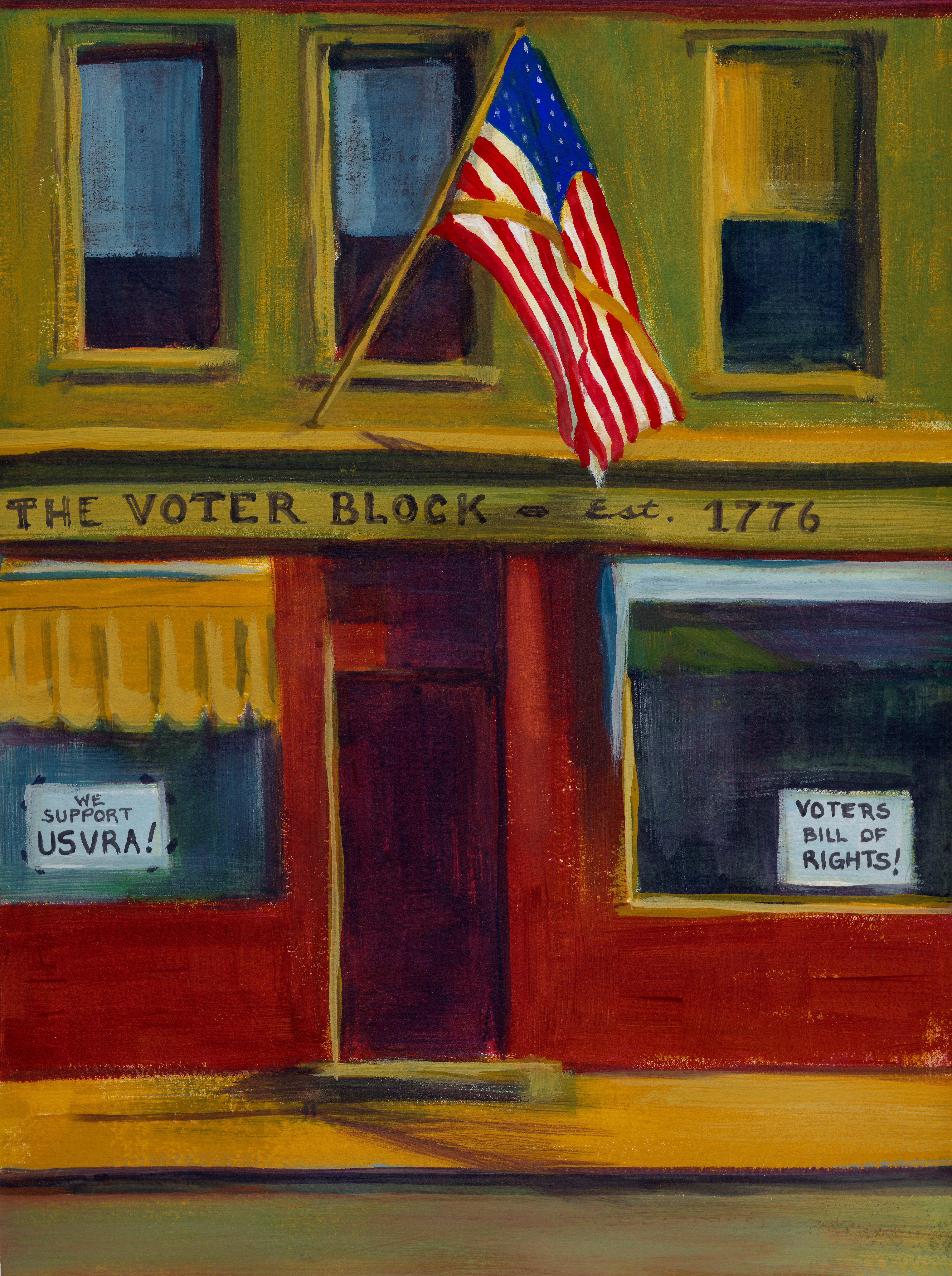
The illustration of a Voters’ Rights demonstration is by Helen Werner Cox, who was trained as a classical painter at Boston University. She is a retired nationally-certified library media teacher, who has made extensive use of art in her literacy programs.
William John Cox is a retired police officer, prosecutor, public interest lawyer, author and political activist. He wrote the Policy Manual of the Los Angeles Police Department defining the principles and philosophy of policing, and he wrote the role of the police in America for President Nixon’s National Advisory Commission on Criminal Justice Standards and Goals.
Although protesters have been driven from their peaceful occupations of almost every location across the nation, including Wall Street, Los Angeles, UC Davis and Oakland, they have managed to hang on at a busy intersection across the street from Texas Tech University in Lubbock, Texas, one of the most conservative cities in the country.
Even though they are enduring a bitterly cold winter, with a wind chill factor of close to zero on some mornings, it appears the Lubbock occupiers are there to stay. Mayor Tom Martin has said: "The land at 19th and University is street right of way, it's not a park. So there is no curfew on that particular piece of property. The people that are engaged in the Occupy Lubbock movement are exercising First Amendment rights."
The young people who are occupying the encampment are dedicated to getting the word out in a community in which many people are unaware of the occupy movement, and they welcome the rank-and-file members of the Tea Party to join them in their efforts to overcome Citizens United. We should all stand so tall and be so well spoken.
: A Voters' Rights Amendment as a Focus for Dissent
Revised February 5, 2012
Unification of the Tea Party and Occupy movements for a common goal - a Voters' Rights Amendment - will re-establish the United States as a democratic republic and will restore control of its government to the voters. The sort of cooperation we will suggest here is possible only to the extent that there is not more opinion-manufacturing or co-optation by political parties or private interests.
Although the corporate and wealthy elite is doing everything in its power - primarily through its mouthpiece, the mainstream media - to convince Occupiers and Tea Partiers that each is an enemy of the other, it is becoming increasingly clear that the two groups have much in common.
Not only do both groups march under the "Don't Tread on Me" flag, they both very strongly believe that corporations should not enjoy the constitutional rights of individuals, regardless of what the US Supreme Court may have ruled. Moreover, both groups believe that their government ignores their most critical concerns, including jobs, personal freedom, and the health, nutrition and well-being of their families, as their elected representatives feed at the trough slopped by the corporate and wealthy elite.
The time is ripe for an open consideration of unity between the two groups. The extensive media coverage amounting to the propaganda-style coverage and pandering of the Tea Party's far smaller demonstrations has given way to acknowledgment of the Occupy movement in the face of police brutality and that movement's staying power.
Support for the Tea Party is lagging with the nonaligned public, as it is increasingly evident that the populist movement has been and is being manipulated by Republican operatives. At the same time, the Occupiers are fighting off attempts by establishment progressives to co-opt their movement.
It is essential that both groups identify their common interests and take collective actions to unify their efforts, instead of attacking each other over other issues about which they may have an honest difference of opinion. Uniting with the increasingly large block of independent voters, Tea Partiers and Occupiers will organize a more effective defense of both of their basic principles, rather than those offered by either the Republican or Democratic party, both of which subvert the rights and interests of workers and small-business owners in favor of wealthy donors and corporate supporters.
The most basic issue that Occupiers and Tea Partiers may perhaps readily agree upon is a Voters' Rights Amendment to the Constitution that ensures that the future of the United States is decided by its voters rather than by the corporate and wealthy elite, which currently manipulates and controls the voters' representatives.
The Voters' Rights Amendment provides that only natural persons are protected by the Constitution, establishes a national paid voters' holiday and calls for a national paper ballot, which includes a national policy referendum on critical policy questions and an alternative write-in vote.
The drawing of The Hydra is by Helen Werner Cox, who was trained as a classical painter at Boston University. She is a retired nationally-certified library media teacher, who has made extensive use of art in her literacy programs.
Chart Credit - Democratic Underground
William John Cox is a retired prosecutor and public interest lawyer, author and political activist. His articles are posted at WilliamJohnCox.com
Years from now as we look back on these troubled times, we will see those who stood up for freedom in the streets and parks of America against the corporations and wealthy elite as the heroes of our time.
Here is a beautiful rendition of the occupation movement with new lyrics by Lincoln Bergman and vocals by Anna Bergman.
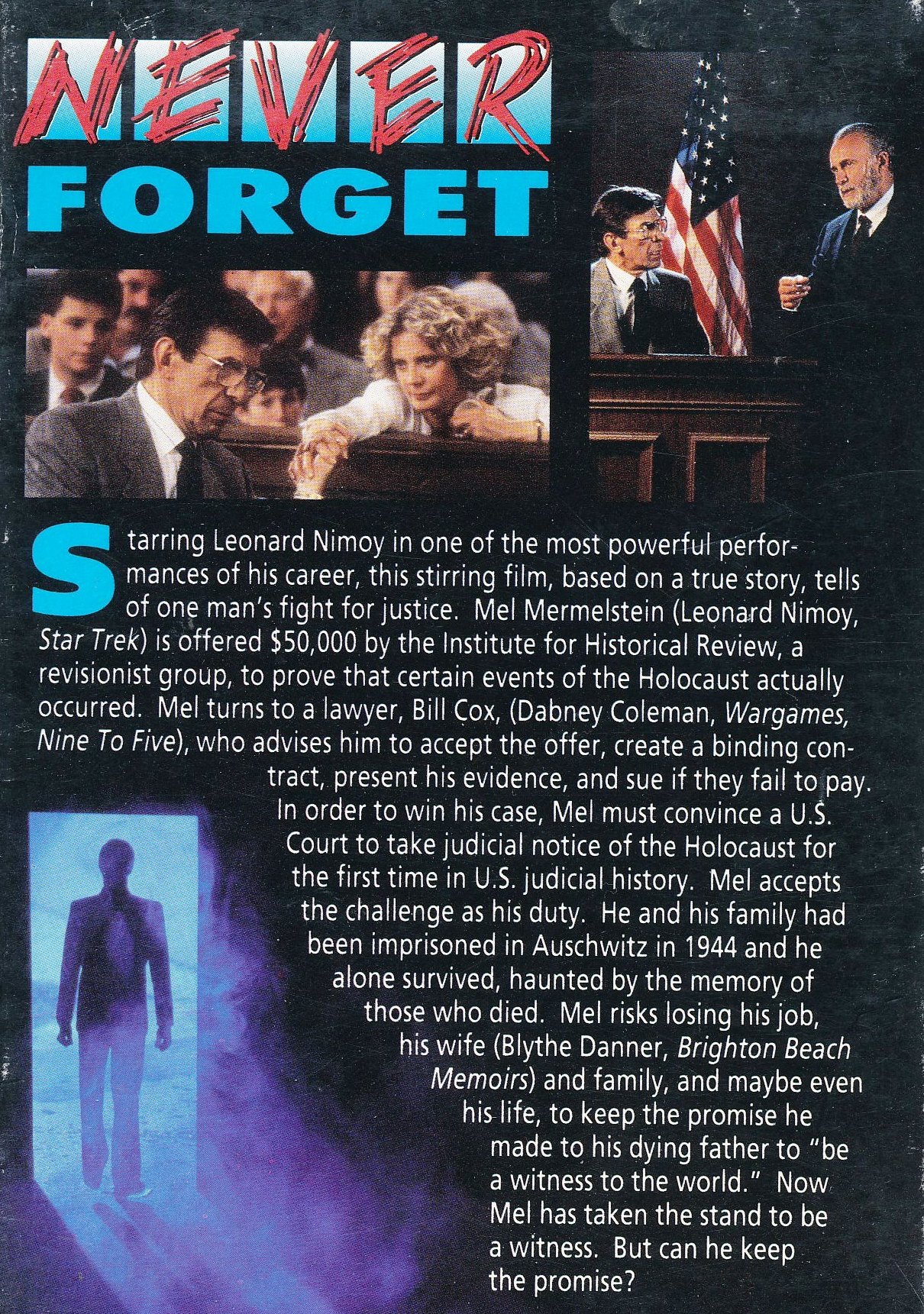
It has been 30 years since I represented Auschwitz survivor Mel Mermelstein in the Holocaust Denial Case.
We were successful in our lawsuit against the radical right-wing organizations which, as a publicity ploy, denied the Holocaust.
Following my argument to the Los Angeles Superior Court on October 9, 1981, a very wise Judge Thomas Johnson took "judicial notice" of the fact that Jews were gassed to death in the Summer of 1944 in the Auschwitz concentration camp.
Turner Network Television made a movie about the case in 1991, entitled Never Forget, and at about that time I wrote a letter to the editor of The Heritage newspaper which ended with these words:
“Some have wondered who I am and what motivated me to undertake legal representation of Mel, and derivatively the millions of Holocaust victims, their survivors, and all who, by their faith or birth, are targets of hate and discrimination. A full answer to this question goes beyond the scope of this letter, but is fairly simple.
“My family arrived in America before its birth as a nation and has willingly sacrificed upon its altar of freedom and justice the blood of our children to defend it, and the fruits of our labor to maintain it.
“The distortions of history and twisted racial and political theories peddled by Willis Carto through his network threatens our collective security and the personal right of everyone to happiness, irrespective of race, religion, or creed.
“I also did what I did because I am a Christian and strive to live by and bear witness to my faith in the true teachings of Jesus. Thus, when this life ends, I trust that it will be the God of my Savior, the God of Israel, who judges the righteousness of my soul. If this makes me a Jew, so be it.
“Finally, as I argued to the court, if the Holocaust did not occur, then where are all the children? Where are the babies?
"Why did I do it? I did it for the murdered children, whether they were Jewish, Gypsy, or Christian. Why? The world has never seen such evil. It can never be permitted to happen again.
“Recently, I was at Mel’s Museum when he had just received several boxes of artifacts from Auschwitz.
"As we stood together and looked at the pile of rusty and melted scissors, spoons and forks, and other items taken from the victims and later burned, I saw a small rectangular flat piece of rusty metal which I asked for and which he gave me as a gift. It is the musical note bar of a harmonica.
“The rest of the instrument has been burned away, and we will never know whose lips were upon it or the songs they played, but I shall forever choose to hear in my mind the happy sound of singing children, too innocent for such death, rather than the screams of their final agony.
"Mel doesn’t have that privilege. He must keep his promise to never forget.”
William John Cox is a retired prosecutor and public interest lawyer, author and political activist. His efforts to promote a peaceful political evolution can be found at VotersEvolt.com
Are you tired of trying to figure out if there’s any real difference between Republican and Democratic politicians, and whether there’s a difference between liberals and progressives, libertarians and anarchists, independents and moderates, or tea partiers and neoconservatives?
Are you fed up with being forced to chose between the lesser of two evils, and are you afraid to cast a vote of conscience because the worser of two evils might get elected?
If you’ve answered yes to any of these questions, perhaps you might want to consider aligning yourself with others who share your concerns and whose political views extend across the spectrum.
The one thing we all have in common is that we are voters and we are sick and tired of our government being controlled by corporations and special interests groups who could care less about our happiness, our health, our families, our jobs, or our futures.
What would you call a political philosophy that focuses on the rights and interests of all voters? What terms would you use and how would they be defined?
Here are a few ideas:
Voterism is the political belief that a legitimate government must be composed of and created by the voters who elect it, and that the primary purpose of such a government is to care for the needs, aspirations and interests of those who elect it.
A votocracy is a government organized to sustain the environment in which its voters live, maintain the economy in which they earn a living, and defend the rights of every individual to be secure in his or her person and property.
A voteristic government continually evolves by encouraging the informed opinion and participation of all potential voters in referenda to develop political policy, not law, and by the election of representatives who are an extension of the voters and who are committed to the effectuation of the policies established by the voters.
A voter centric government is one that is founded upon the belief that a free society depends upon the handwritten selection of representatives by voters who use hand-counted paper ballots and who celebrate all national elections with a paid voting holiday.
A voteric is a nation whose government is organized according to voteristic principles. It is one in which voting is a sacrament of the national political religion.
A voterian believes that a voteristic government can only impose minimal legal restrain on the liberties of each voter in her or his pursuit of happiness.
A voterist believes that a votocracy created and controlled by individual voters is the most favorable form of government.
Voterism is not a political party, rather it is a way for independently-minded and concerned voters of every political persuasion to think for themselves.
As our rapidly-changing world spins into a new millennium, and the older forms of governments are using new forms of technology to become more repressive of and less responsive to their electors, isn’t it time for all of us to consider a modification in how we organize for the common good?
Image Credit: sacbee.com and storiesofusa.com
William John Cox is a retired prosecutor and public interest lawyer, author and political activist. His efforts to promote a peaceful political evolution can be found at VotersEvolt.com
Google “TSA stupidity” and you will find that almost one-and-a-half million websites have something to say about the subject.
If the United States is to avoid another major terrorist attack on its air transportation system without placing greater restrictions on the civil liberties of air travelers, the Transportation Security Administration (TSA) had better get smart.
Everyone who travels by air in the United States has a depressing story to tell about airport screening.
Media stories of a gravely ill 95-year-old grandmother forced to remove her adult diaper before being allowed on a plane and viral videos showing terrified children being intimately touched by TSA agents are more than depressing. They are a chilling commentary on the police state increasingly accepted by the American public in the name of security.
Air travelers dare not complain. TSA standards focus additional scrutiny on travelers who are “very arrogant” and express “contempt against airport passenger procedures.”
Is such repression the only choice? Or, can TSA officers be trained to exercise the necessary discretion to detect would-be terrorists, while allowing innocent travelers to swiftly and safely pass through screening?
A reasonable and practical balance in airport security screening policy must be obtained before another terrorist attack results in even greater repression.
Image Credit: Transportation Security Administration and Zimbio.com
William John Cox is a retired prosecutor and public interest lawyer, author and political activist. He authored the Policy Manual of the Los Angeles Police Department and portions of the Police Task Force Report on the role of the police and policy formulation for the National Advisory Commission on Criminal Justice Standards and Goals in 1973. His efforts to promote a peaceful political evolution can be found at VotersEvolt.com
Voters Evolt! promotes a Peaceful Political Evolution consisting of a national voting holiday and uniform paper ballot which asks questions on a National Policy Referendum and provides for a Write-in Vote for President.
Interviews regarding the Evolt were conducted at the Netroots Nation Conference held in June 2011 in Minneapolis.
Among other political leaders, comments were obtained from five Congressmen, one U.S. Senator and three state representatives.
Here’s what they had to say about a National Policy Referendum and a write-in vote for president.
“Let [the Constitution] be taught in schools, seminaries and in colleges; let it be written in primers, in spelling books and in almanacs; let it be preached from the pulpit, proclaimed in legislative halls, enforced in courts of justice. In short, let it become the
political religion of the nation.”~ Abraham Lincoln
American voters are preparing to vote next year to elect a president to preside over their government for the next four years. Will they return President Obama to office, or are they disappointed enough in his performance to elect a President Romney, Palin, Pawley, Paul, Bachman, Cain or Perry? What will the next president do about the environment, the economy, education, jobs and health care? Will he or she end the failed Wars on Terrorism and Drugs?
In spite of all of their lofty promises, mealy-mouthed answers, and misleading advertisements, American voters really have no clue about what any of the candidates will actually do if and when they get into office.
With $3 billion wasted on the Help America Vote Act and the unreliable electronic
machines it has purchased, voters continue to worry about whether they will even be allowed to vote next November, much less if their votes will ever be accurately counted.
Your voting power under the current system has been reduced to electoral slavery, and you are seriously deluded if you think you have any real control over your government.
Can you even dream about a National Ballot that will establish your authority, one in
which you, rather than politicians, create the policy guidelines for your government and you, rather than hacked computers, decide whom you want to implement your policy?
Imagine there is a paid holiday set aside for the presidential election and
that every citizen is encouraged to register and to reverently observe the most sacred sacrament of the nation’s political religion.
Think about walking into your neighborhood polling place and being handed a sheet of heavy paper with 12 policy questions for you to thoughtfully answer, yes or no, and a
list of party candidates for you to consider before you carefully write in the name of your personal choice for president and vice president.
Sleep well with sweet anticipation during the week or two it will take to patiently hand count the millions of paper ballots before the clear voice of American voters is heard to echo around the world with the resounding message that democracy is alive and well in the land of the free.
Feel the power flowing into your hands and sense the clarity of your mind!
Close your eyes and picture the paper ballot you would like to see handed to every voter on November 6, 2012:
Given the chance, how would you vote?
What questions would you like to see on the ballot?
What are you waiting for? Voting is a both a right and a duty – use it or lose
it!
All of us have this in common: We share this fragile nest we call Earth; we gaze out with wonder at the universe around us; and we are not alone. We are a part of Universal Mindkind which has existed for all of eternity.
We have been watched over for millions of years, as we slowly pecked through our shell, and we will be lovingly looked after until we learn to fly from our nest.
As there is but peace throughout the universe, we will be grounded here until such time as we, ourselves, overcome and cure the viruses of hatred, deception and violence which infect us, individually and collectively.
We are not quarantined. It is just that we will never acquire sufficient knowledge, wisdom and power to travel to any significant place in the universe, into adjacent dimensions, or forward and backward in time, until every child on Earth, irrespective of race, religion, culture or social condition, has equal access to nutrition, health care and education.
If we fail to grow up and we are stillborn in our own waste, millions of years may again pass, as the ruins of our self destruction are scoured by the winds and rains of time, until another sentient being looks up, notes the phases of the moon, marks the solstices of the sun, sights the planets moving among the stars, and learns to fly.
For surely, the rare blue water planets of warm yellow stars circling near the edges of spiral galaxies are too precious to be wasted. These are the nests where the eggs of creation are found, where all that is beautiful is born, where we nervously stand with our fledgling wings spread wide, and where the Children of Mindkind are brought forth.
William John Cox is a retired prosecutor and public interest lawyer, author and political activist. His efforts to promote a peaceful political evolution can be found at VotersEvolt.com.
While Congress bickers and the President dithers, roads are crumbling, bridges are failing, dams are cracking, and water and sewer systems are leaking all across the United States. If that’s not enough to worry about, the government is threatening to default on the $2.5 Trillion it has borrowed from the Social Security Trust Fund, and few private employers are offering decent retirement plans.
A simple solution to all of these problems can be found in a secure national retirement system that allows all American workers and small-business owners the opportunity to participate in a tax-free infrastructure fund invested in the bonds issued by state and local governments.
Don’t Mess With Social Security
In spite of the constant lies being told by those dedicated to its destruction, Social Security is one of the most successful government program ever created in the United States.
In 1935, the American people entered into a contract with their government to purchase an insurance policy ensuring they did not become destitute when they were no longer able to work.
Today, more than 90 percent of all workers and the self-employed are covered by Social Security, and one in six Americans, or more than 54 million, are receiving a benefit. Most beneficiaries are receiving a return on their contributions that is far greater than they would have received if they had invested the same funds in the private financial markets.
It has been a good bargain, a win-win situation. For the oversight of their contributions, workers and small business owners only pay one-quarter of the amount paid by private pension funds to their money managers. Overall, more than 99 percent of the premiums go to benefits and less than 1 percent is spent on overhead.
The only unfairness of the system is the annual cap on contributions ($106,800 in 2011), which requires lower- and middle-income workers and small-business owners to pay a higher FICA tax rate (as a percentage of income) than those who earn more than the annual cap.
There is a present surplus, and there are sufficient assets in the Trust Fund to pay 100% of benefits until 2042; however, since only 83 percent of all wages paid are subject to social security taxes, elimination of the cap would increase annual social security revenues by almost 20 percent, or roughly $100 billion per year, more than enough to take care of any foreseeable future “shortfall.”
At a minimum, the law should be changed to establish the income cap at the president’s salary, which is presently $400,000 per year. In that way, at least, everyone whose salary is paid by the taxpayers will pay their fair share.
The Trust Funds have been wisely and conservatively invested in the interest-bearing bonds issued by the Treasury Department (as required by law), which has benefitted the efficient operation of the government. However, as the overall federal debt has ballooned and the economy has tanked, bond redemption to pay benefits has to be paid out of current tax revenues, or borrowed, which further depresses the economy and increases the debt.
Threats to default on Social Security benefits to American workers and small-business owners place these citizens in a subordinate position to foreigners who have invested in U.S. Treasury securities and who expect full payment.
For perspective, the total federal debt has doubled in the past 10 years to almost $14 trillion, or more than $100,000 for every American household. As of January 2011, foreign holdings of Treasuries amounted to $4.453 trillion, and the amount held by the Trust Fund was only $2.5 trillion.
The only way for the government to satisfy these obligations is to create jobs for workers and to encourage the profitability of small businesses. The smartest way to do this is to repair and improve the infrastructure of America.
Establish a Safe Retirement for Everyone
The average annual benefit of $12,912 paid by Social Security is barely above the official poverty line of $9,000 revealing that the benefit is a minimum safety net, rather than a comfortable retirement.
The number of private employers who offer retirement benefits to their workers continues to decline, and only 18% of workers participate in private plans, compared to 80% of public employees.
In addition, private employers are less likely to offer “defined benefits” based on years of work and levels of pay. Increasingly, private retirement plans are “defined contributions” programs based upon 401(k) plans and Investment Retirement Accounts (IRAs), which are dependent upon the stock market and Wall Street manipulations.
What is needed is a personal retirement plan that is more secure for workers and small-business owners and which is good for the country and its economy.
An alternative investment plan would supplement traditional Social Security and allow all Americans to make additional tax-free contributions into personal accounts in a retirement fund that invests its assets in the obligations of local and state governments, rather than the federal government.
Tax-free municipal bonds have always been a wise investment for most people because they provide a better return than passbook savings accounts, without the risk of stock market gambling. A national retirement fund should provide the same benefit to all workers and small-business owners, allowing them to obtain a reasonable return on their investments at a minimal risk to their retirement plans.
Employers could agree to match “All-American” contributions as a job benefit; employees could move their accounts with them from job to job; workers could negotiate the level of each subsequent employer’s contribution; and small-business owners could safely invest in their own futures.
Retirees could decide for themselves whether to invest their savings in a lifetime annuity at retirement; they could choose to spend their entire nest egg as they please; or they could leave it to their heirs.
The stability of investments in state and local bonds would require minimal management costs, increase the rate of returns, and would allow the principal and earned interest in personal accounts (which could be withdrawn at any time to meet emergencies) to be guaranteed by the federal government just as it does for bank deposits.
All-American accounts could be established by parents at the birth of their children and grow throughout an individual’s lifetime until they choose to retire. There could be survivor benefits similar to those provided by traditional Social Security, and the personal accounts could mature as early as age 55, allowing workers and small-business owners to transition into other, and perhaps more interesting secondary careers.
The United States would benefit as a whole from an alternative personal savings plan by having a readily available, domestic source of investment funds to restore and improve its state and local infrastructure and public facilities.
Rebuild the Infrastructure
One of the driving forces of the U.S. economy during the last 60 years has been the construction of a vast infrastructure including roads, bridges, water and sewer systems, river locks and dams, all of which is at great risk, especially in the case of a massive earthquake or other natural disaster.
Today, 25% of U.S. highway bridges are “functionally obsolete,” “structurally deficient” or simply too old to be safe, and vehicle traffic congestion alone costs Americans $78 billion annually.
Public water systems waste more than seven billion gallons of fresh water each year, and the rising cost to repair them is now estimated at $335 billion.
Billions of gallons of untreated wastewater are discharged each year into rivers, lakes and oceans, and more than 4,400 dams are susceptible to failure.
The cost of repairing the overall infrastructure is estimated at $2.2 trillion over the next five years. However, every billion dollars invested in the maintenance and repair of the infrastructure will create 35,000 jobs and will generate $6.1 billion in new economic activity.
Construction of the current infrastructure was subsidized by the federal government, including the interstate highway system, locks, dams, bridges and water and sewage systems; however, the cost of maintenance and repair has increasingly fallen on the states and local authorities as the federal contribution has decreased over time.
President Obama wants to invest $50 billion to upgrade the infrastructure; however, he is also promising to cut the federal budget and to “live within our means.” Senators Kerry, Hutchison and Warner recently proposed to invest $10 billion in an “infrastructure bank” that would encourage private investment in large building projects that will generate a return, such as toll bridges and tunnels.
These funds would be better used as a nest egg for an All-American Fund to encourage the private investment by millions of workers and small-business owners into public systems that provide a benefit for everyone instead of Wall Street bankers.
The quality of life offered by the United States, and its infrastructure, has become a model for the rest of the world; however, it is both naive and arrogant for Americans to expect other people to risk their hard-earned money to pay for its maintenance.
It is time for the United States to do what it does best: come up with a better way to ensure the future of its children. An All-American Retirement System will do that, and it will help the U.S. to regain the respect and admiration of the world.
William John Cox is a retired prosecutor and public interest lawyer, author and political activist. His efforts to promote a peaceful political evolution can be found at VotersEvolt.com.
On July 9, 1979, a class-action lawsuit was filed in the U.S. Supreme Court on behalf of all citizens alleging that the government no longer represented the interests of ordinary voters. As a remedy, the Court was asked to order the other two branches of government to hold a national policy referendum on the most critical questions facing the nation every four years when its president was elected.
The Court declined to hear the petition, but the Los Angeles Times commented that the case was one of the ten more interesting cases the Court declined to hear that year.
The issues presented by the petition are even more critical today. Pertinent parts of the petition follow.
It Is Necessary and Urgent That This Matter Be Reviewed
If it were true that a course of action was being undertaken by elected representatives which would ultimately be destructive of the continuance of effective common government, would not there be a co-existent threat to the lives and fortunes of each of its citizens?
If a citizen were to recognize what she or he perceived as such a threat, what redress would that person have?
Inherent in a republican form of government is access by individuals to their elected officials. However, if one were to believe regularly published reports that Congress is in the grips of special interests groups, and if one were to realistically perceive that letters by an ordinary citizen to one’s elected representatives either goes unanswered or provoke a machine-signed form letter response, then can it still be said that ordinary citizens are represented in government?
Another alternative, clearly abhorrent to the continuation of peaceful government, would be for a citizen to declare his or her independence, and to undertake violently to subvert the action of government.
In the Declaration of Independence, it was made clear that individuals have a right to declare their independence of a government which is no longer willing to address itself to the fundamental rights of its citizenry.
In a free and peaceful society, is not the only remaining viable remedy a petition to compel a vote?
The right of the people to vote for elected representatives is contained in the Constitution as amended by Articles XV, XVII, XIX, XXIV, and XXVI. In addition, every citizen of the United States has a right to petition the government for redress of grievances. (U.S. Constitution, First Amendment)
Confirmation of the right to petition in the Bill of Rights indicates that its effect provides more than a right to simply vote for elected representatives. Otherwise, its presence there would be without effect, a principle contrary to rules of constitutional interpretation.
If a petition were to be brought to compel action by the executive and legislative branches of government, where else could the petition be brought but in the Supreme Court of the United States?
All power not delegated by the Constitution to the federal government or reserved to the States, resides with the people. (U.S. Constitution, Tenth Amendment)
Since there can be no right without a remedy, is it not true that the one power retained by each citizen in a democratic system is the vote? Therefore, if a decision had to be made, affecting the future of all people, would they not have the right to demand a vote on the issue? If such a vote was advisory only, would not the process be consistent, rather than inconsistent, with the Constitution?
Should this Court decide that the continued existence of the Nation, as originally conceived, was dependent upon a national expression of its governed people, would it not have a duty to compel the Senate and the President to hold a national policy referendum?
Would not such action be essential in order to peaceably explore the will of the people necessary to ensure their survival and that of their common government?
Conclusion
At no time in the history of the United States has it been so threatened as it is today. In a shrinking technological world, in which wide oceans and friendly neighbors no longer offer protection against a precise first strike nuclear attack against our defensive weapons; one in which the United States has become increasingly dependent for its survival upon petroleum energy from unstable nations rapidly coming under the influence of totalitarian domination; and one in which the United States is viewed with disdain by many, as a country without internal conviction or external strength, is it not time to allow the people a voice in the future of their nation and in the quality of life preserved for their children?
Internally, is it not true that the election of representatives is now more dependent upon massive expenditures of contributions from special interests groups than upon a vote by an informed electorate?
Has not the vote in political contests become so valueless as to create disenfranchisement through apathy for most Americans?
Among candid speaking people, it is now necessary, for the first time, to assess the possibility of reduction in freedom in order to ensure our national survival.
In a world in which the frequency of internal terrorist attacks has become so commonplace as to regularly cause the collapse of governments, is it realistic to believe that the United States will long remain unscathed?
Upon the advent of internal upheaval, how long will the Bill of Rights survive the need of government to maintain order? An exiled prominent soviet dissident, Aleksandr Solzhenitsyn, advised in a commencement address to Harvard graduates in 1978 that Americans must be ready to surrender freedoms in order to counter Russian power.
Do we want our children to live in the absence of freedom? Do we want to? Must we?
The Constitution expressly provides a right of citizens to petition their government for redress. If individuals are denied a right of redress, is not the alternative a resort to violence?
In a free society, is it not the duty of a concerned person of conscience to avoid the use of force, even if he believes that his existence under ineffectual government is being threatened?
Does it not become the duty of such an individual to petition his government to allow him to exercise his vote along with all other citizens in a national policy referendum in order to effectuate a peaceful reformation?
Is it true that we are at a point in history where critical decisions are being made which shall forever decide the future of our Country?
Is it not a time of peril for all those citizens upon whom the Government is dependent for its legitimacy?
Has it not been a duty of each of us since the moment of the existence of Mankind to provide a better world for our children than that which we inherited from those who conceived us? If this be true, and if a citizen finds as a matter of conscience, that his government is no longer responsive to his needs, is it not his duty to his children and grandchildren to issue the most forceful petition possible, short of the threat of violence?
Does not the Supreme Court have an equivalent duty to at least review such a petition, to weight the threat, and to consider alternatives?
William John Cox is a retired prosecutor and public interest lawyer, author and political activist. His efforts to promote a peaceful political evolution can be found at VotersEvolt.com.
There are currently, 5 guest(s) and 0 member(s) that are online.
You are Anonymous user. You can register for free by clicking here
Miscellanea
More than 6,000 visitors have registered since this webpage was launched in September 2010. Your visits are welcomed, and your taking a moment to sign the guest book is greatly appreciated.
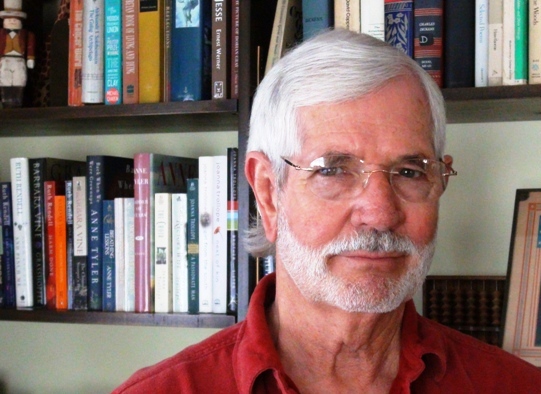
This is the personal page of William John Cox. His political pages are Voters Evolt! and the USVRA (Click Photos)
And, I Quickly Laugh At Everything For Fear of Having To Cry ~ Pierre De Beaumarchais
Ben Sargent ~ The Austin American-Statesman
Growing Up & Growing Old
I have now lived for 71 years, and I have enjoyed my life to the fullest.
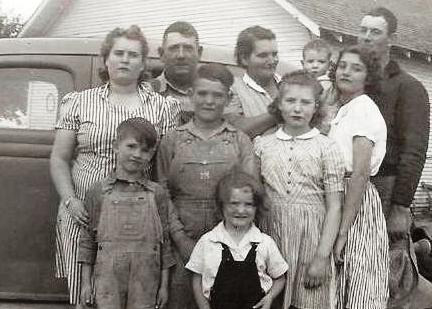
The long and dusty road I have traveled from the West Texas dry-land cotton farm, without indoor plumbing or electricity, where I was born to the modern space-age urban society in which I now live has been both challenging and interesting.
I have witnessed many changes along the way, some for the worse and most for the better. While, I would not want to repeat any part of the journey, I continue to be excited about what's waiting over the next hill.
Please click on the photo to share a few images from the trip set to Bob Dyland’s The Times They Are A-Changing.
The Skinny House
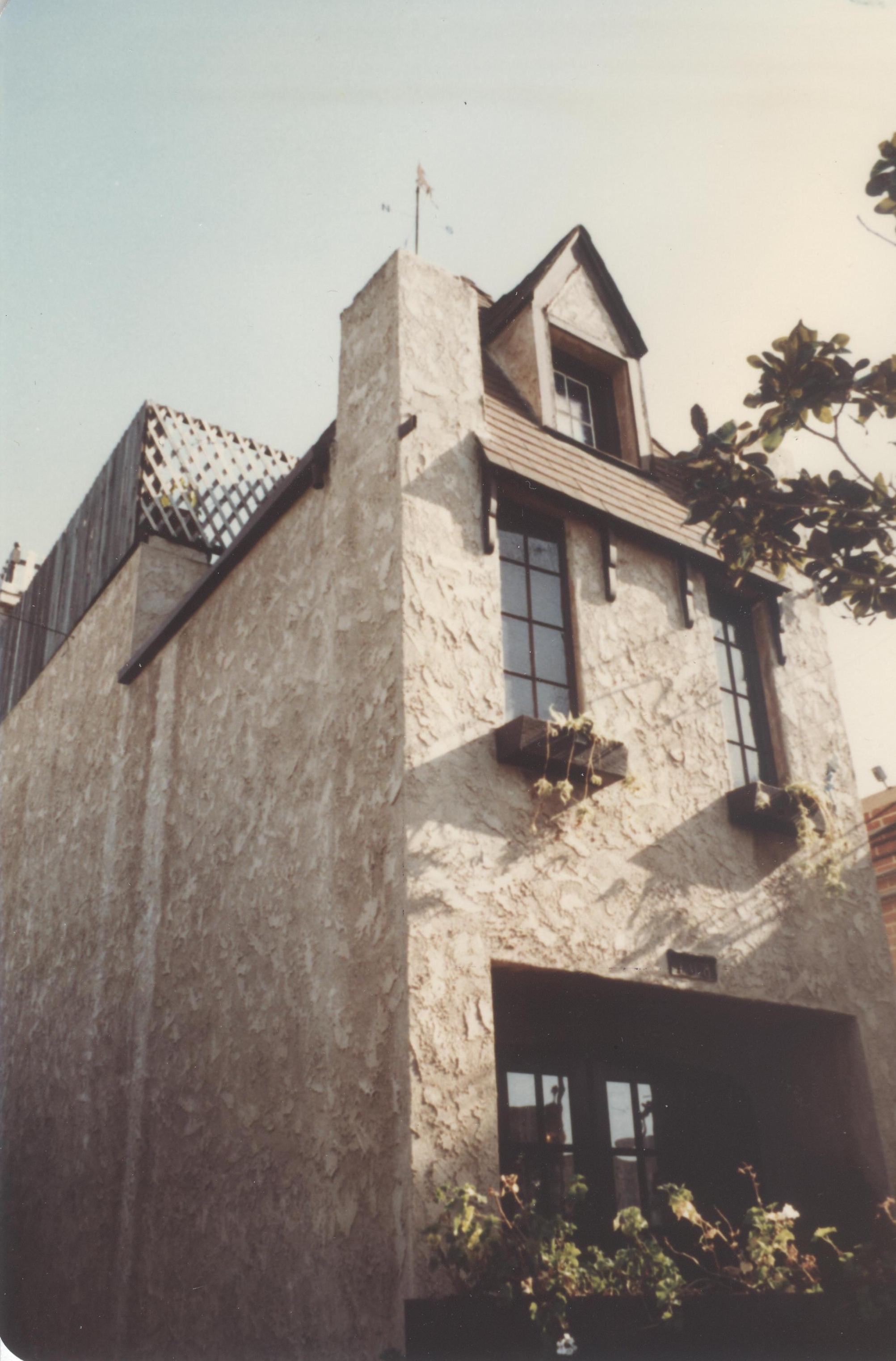
In the late 1970s, I practiced public interest law in a historical landmark building in Long Beach, California known as “Skinny House.”
The house was constructed in the Great Depression on a 10x40 foot lot by an ambitious young architect using donated materials and labor. Local craftsmen worked on the house for the chance to obtain employment from the visitors who attended open houses.
Thousands of people visited the house during the years of my occupancy.
Skinny House has been featured in both Ripley’s Believe It Or Not and the Guinness Book of World Records. It truly is a magical place, which you have to see to believe.
Please click on the photo for a brief tour of Skinny House as it was when I lived and worked there.
My Desk
Forty years ago, during my first year of law school, I saw two old long, narrow law school desks in a dark back hallway of the old Southwestern building in Los Angeles. I stopped in the office and was told the desks were being thrown out and that I could have one if I wanted. I did.
I hauled it home, sanded out decades of scratches and carved initials, and refinished it.
In the years that followed, I sat at the desk through the duration of law school, studied for and passed the bar exam, hauled it to and from Washington, D.C., wrote a number of books on it, some of which have been published, practiced public interest law from behind it, including the Holocaust Denial Case, negotiated the publication of the suppressed Dead Sea Scrolls, and finally moved it into the study when we purchased our home ten years ago.
Returning to Long Beach a couple weeks ago after almost two months on the road and in the air, flying across and driving up and down both coasts of America, my wife, Helen, decided it was time to clean out and repaint the study. And... while we were at it, perhaps I should also refinish some of the furniture, including my old desk which was showing her age – possibly approaching the century mark.
The desk is six-foot long, 16-inches wide, solid oak, with carved trestle legs. It cleaned up nicely, took the dark stain, received six coats of satin finish, and several coats of wax. She has never looked better.
My computer and printer are back in place, the keyboard and mouse tray slide in where the drawer used to be, small wood file cabinets are at each end, my comfortable chair is in front of it – I no longer have an excuse.
It’s time to get back to writing. I’ve got a completed manuscript to get published, another half done, and a stack of articles to write, but I thought I’d take a few minutes to share a story about an old dependable friend who’s been with me for a very long time.
The Art of Helen Werner Cox
My wife, Helen was trained as a classical painter at Boston University’s School of Fine Arts. She recently launched a new website to display her artwork, which includes paintings, drawings, murals and wood carvings, which are her latest passion.
Please click on the carved image for a tour of her galleries.
The Garden Wherein I Live
Each morning as day is breaking, we turn on the back fountain in Helen’s garden and the hummingbirds flock in for their morning baths and conduct a Mozart symphony with their beaks.
The Holocaust Denial Case
Among the cases I handled as a public interest lawyer was a lawsuit in 1981 by Mel Mermelstein, a survivor of Auschwitz, against several radical right-wing organizations which, as a publicity ploy, denied the Genocide of European Jewry during World War II.
The legal matter was covered by the national media, and it was widely reported when the Superior Court of Los Angeles took “judicial notice” of the Holocaust.
In 1991, the case was featured in the Turner Network Television movie Never Forget which starred Leonard Nimoy and Dabney Coleman. The movie can be viewed on YouTube in nine installments. Excerpts from the first follow:
The Last Generation of Mindkind on Earth
The following essay was written many years ago, and it remains the essential basis of my personal political philosophy. It is posted here for those who like to mix a little existential philosophy with their politics.
Questions.Should the citizens of the United States engage in a peaceful political rebellion to avoid economic disaster and future wars founded, not upon wishful thinking and hopeful denial, but on a simple and specific agenda for effective collective action?
Is not the desire for freedom a universal trait of all sentient beings? Otherwise inequality of opportunity forever retards the intellectual evolution of their species.
Discussion. Once the melody of freedom's song is raised in democratic harmony, it echoes throughout the heavens for all to hear, as there is but peace in all of the universe, and it has been that way for all of eternity.
No being, truly thinking, makes war instead of exploring the stars, for without peace, no being can fly far from their birth planet. They can only foul their nest and peck their siblings to death, thinking conditions beyond their nest are the same as surround them, never knowing that there's no Star Wars, except in the blind fantasies of those who never learn to see.
Danger. If there is but peace in all the universe and it has been that way for all of eternity, what then must we do to have any voice in our fate?
Are we to continue living in fear of atomic-tipped missiles in the former USSR? Is there a more real danger that one day some small dispute ignites a financial war and China dumps its dollars or OPEC begins to trade its oil in Euros?
Or, what if some other tiny economic turmoil twists the stock, bond, currency, and real estate markets into a chaotic contractual tailspin, and for whatever reason, in a single day, paper and electronic money simply cease to have economic relevance and virtually all legal wealth is eliminated?
Then, only gold and other metals will have any real value; not silicon, plastic, or credit ratings.
Quick. Then, when there's no gasoline for sale, nor cabs to call, my spare change will be worth more than your former millions, and my bicycle will get me farther than your BMW.
Without electricity and wave transmissions, your telephone, computers, televisions, DVDs and stereos are worth less than my knife.
If all houses are for sale and all apartments are for rent, all titles are worthless, and all property is available for the taking.
If everybody is looking for work, nobody will be hiring.
If everything worth stealing has been stolen, you will find nothing to eat, no matter the caliber of your gun, or the number of your last few bullets.
Much like the Earth being struck by a giant asteroid, perhaps one-third, half, or even
three-quarters of us, billions all over the world, could all be dead in a matter of months.
No possessions, no livestock, no grain, no fruit, no game, nothing: Nothing to eat but the flesh of our own kind, starting with the babies, who will be the first to die.
Dirty. Will it be a blessing if the troubles are prolonged? Unless something is done, unless we, together, take positive action, things will steadily get worse instead of better.
Negatives will multiple negatives, violent crime will continue to increase, and the social ills which compel the forgotten to riot will remain uncured.
Fires, floods, earthquakes, and other disasters will not cease to occur, but our
governments will cease to do anything to help anyone.
At first, as now, our governments will cut to the "basics," and finally will do nothing but collect taxes, sacrifice our youth fighting local warlords, and impose the death penalty for all crimes, either immediately or through forced labor.
Lost Knowledge. The downward spiral may be less steep but just as deadly, for we will soon lose the collective genius of the last two or three generations of accumulated race knowledge.
As we gather here together at the threshold of galactic awareness, we stand to lose all we've learned and conceived of in just the last century.
Once the last skulls that once contained our vast database of information and experience are laid in the ground – at that moment, the flame of our collective intellect will flicker and die.
When the daily quest for food leaves no time in the day to teach the little children to
read, the last surviving texts will be of small value except to start a fire.
At that precise moment, when the last of us who can read these words and comprehend their meaning, sleep our last dream, we, who once shared these thoughts, will cease to be; our words will be silenced and our learning lost, and our tears and toil will have been for nought.
The Last Generation. Along with our concrete castings, twisted girders, ancient carvings in stone and other megalithic artifacts, eons from now, a few scraps of our language may be found to identify us as the last generation of one of Gaia's children, an aquatic primate, known as human, who once climbed out of the lakes, through the trees and along the rivers, sailed in boats and settled distant shores and waterways around the world, harnessed the atom and flew to the Moon.
There the story will end, and across the universal field of mind and along the eternal
corridors of time it will be whispered of how the human infant's first few breaths in the
breeze of wisdom were smothered by the wasting virus of deception, hatred, and war. Of how it lay struggling in its earthly crib, looking up with fevered eyes through the cosmic window, fighting with all the strength of its existence, fortified by the antibiotics of knowledge, and its healing properties of wisdom, yet still too weak to see.
Nothing more can be said, for we were stillborn.
Song of Mindkind. Or, celestial history may record that we, the last generation of the second millennia following the time of Jesus, fifteen centuries after the teachings of Muhammad, were the last generation to suffer war and who survived birth as Children of Mindkind on Earth.
Then, songs will be sung and stories told of our joining minds in a powerful signal of freedom, of the moment our souls sensed the secret and soared with the Spirit of Wisdom to vibrate the waves of eternity with the melody of our children's voices, so they may be forever heard to harmonize in the Universal Choir of Peace.
Reality of Now. As glorious as that image may be, now is now, and let's face it folks; things are bad and the future is looking worse. So, what can we do?
First. We must overcome our fear, and the anger and distrust it compels, and recognize the actual and potential power available in the relatively free, well-educated and communicating society we still enjoy in the United States.
We must concentrate our individual vote into its most powerful political focus ever, for if we don't use it with responsibility, we are certain to lose it with alacrity.
Next, we must see ourselves for who we really are. Much like the old advertisement for Ivory soap, we are 99.44% pure.
If we look at the totality of the billions of human decisions made every day, worldwide, including all the software, blueprints, CAD drawings, business plans, PERT charts, budgets, contracts, planting of crops, even deciding in the morning what to wear to work, or what to eat at lunch, we will find that we mostly tell each other the truth and closely cooperate to get most things done with the help of others we trust.
Otherwise, things simply wouldn't work; you couldn't drive down a highway without striking another car, and you couldn't put your children to bed in the evening without whimpers of hunger.
Travel anywhere in the world and visit any home, and you will only find families struggling each day to live and who love and cherish their babies. They all want a better life for their children, and they mostly teach them the best way to earn it is to tell the truth and to work hard.
From the moment we struck the first flint and created language to teach the making of fire and tools, our species has been defined by our ability to mentally synapse beyond the limitations of instinct, acquire and expand knowledge, and to teach the tool of learning and the value of exploration to each new generation.
Now, as we learn to step from the fertile fields of Earth into the mind field of time, and to surf the waves of information along the seashores of space and to cast our net upon the wisdom of eternity, we must continue to trust and increasingly respect the thoughts of others on various subjects, though opposed to our own.
The opinions of others may be based upon better information or different insights, and even if wrong, we will all profit more from civil, constructive discussion, than from dissension, deception and destruction.
Though some are so sly as to forever lie, and the ability to deceive and disassemble will forever be seen by some as a value in achieving group or individual goals, and though many will forever respond to fear with a violent hatred of others, and real fear once felt can never be erased.
Although everyone may forever try to cheat on their taxes, these emotional matters of conscience are but a weak pathology on our physiological soul, best cured by the light of truth and the balm of understanding.
Courage. Each of us must find within ourselves the individual courage to perform one simple rebellious act and elect to decline protection of the computerized secret ballot.
Instead of responding like lab animals pushing a touch screen in response to the latest ten-second television smear ad, we can each take a little longer to vote and to carefully consider the candidates presented on the ballot by the various parties and factions who vie for our vote.
Once we decide, we can demonstrate our literacy by carefully writing in our personal choice for president of the United States, whether or not his or her name is or is not on the ballot.
Presently, half of all voters don't bother to go to the polls. But, if only 15 to 25% of us were to write in our vote, trust that the politicians will be scrambling to ensure that all
votes cast for them are legally counted, as they should be for anyone registering a willingness to accept votes cast in their name for any office of public trust.
Uncomplicated statutes should ensure that existing parties would continue to provide consensus for people with similar political views and the organization and resources to promote those views, and all Constitutional institutions, including the Electoral College would continue to function as intended. There would only be a simple adjustment in who does what.
Instead of being offered phony political platforms, devoid of substance or clearly defined policy, we the people would debate and express our desired policy and elect those candidates most committed to enact it.
National elections could become festive and joyous events, with real political parties to celebrate the end of electioneering and relief from hired advertising.
There should be a paid holiday and voting could extend over a three-day weekend.
It might even take a week to count all of the ballots, and there might have to be a run-off and debates between the top two candidates.
Who can know for sure what may happen? But, surely, the election process which evolves will have to be better than the one we have now, when media exit polls decide elections by the morning coffee break in Iowa, and the loser concedes by lunch time in California.
In any case, by more effectively achieving a better personal understanding with our government and those we elect to represent us, we citizens would gain greater control, our lives would be less restricted, and our vote could become a sacrament of social and civic freedom.
Confidence. Next, we must insist that the ballot include for our vote the twelve most relevant and critical issues facing our government during the upcoming four-year term.
Our yes or no vote would be an expression of our collective judgment in the making of our own national policy.
We would not make law: That is what our elected assemblies are for. However, the voice of a 51/49 percent split would be far different than the roar of an 89/11 vote in curbing the influence of powerful and wealthy special interest groups.
If we simple voters are smart enough to earn money and to figure out how to pay our taxes, we are also smart enough to collectively express basic policy to guide our government, and to personally vote for whomever we consider most qualified to act in accordance with our desired policies.
Duty. Everywhere in the universe, on every planet with sentient life, in every nation on Earth, and in every society, every person has a universal right and duty to act, individually and collectively, to secure essential freedom for the nurturing and education of their children.
Otherwise, if we, individually, sit around doing nothing except wait for the leadership of our politicians, whose only idea of making policy is to increasingly proscribe otherwise legal behavior, increase penalties, and take away rights (except when they are caught), we will find ourselves alone when our individual worlds collapse around us.
Choices. Should we imagine, however, that all policy questions were thoroughly debated, and such a large margin of voters answered as to be an undeniable expression of desirable public policy, and that sympathetic representatives were elected to work out the best ways to implement those policies, we can for a few moments reflect upon the kind of life we might enjoy here in America, or in any other nation, country, state, or society whose free electors so elect.
Family. The society which evolved from such an free election could not be a utopia, for the daily problems of life never go away until solved, and parents will always have to work hard to raise their children and to teach them to survive. But, the society could be one in which our government becomes more compassionate and caring about our family needs and less concerned about itself.
Every citizen, irrespective of wealth or status, requires certain necessities every day of their life, and for those with responsibilities of family, matters of health, education and
freedom of travel are essential to social survival.
To meet these core needs, all citizens could be equally helped by the resources of national Health, Education and Energy Corps.
Each Corps would have its own national service academy, with admission by congressional appointment, and would commission officers dedicated to serving the citizens of a free society and their families.
Then, every parent and every child's burden of caring for the illnesses and injuries of family members would be lightened by the compassion and basic care provided by their Health Corps.
Each child would receive a minimum community college education, to absorb the vast knowledge that challenges their comprehension and receive better training for employment, and each would be personally encouraged and tutored by the data and resources of their Education Corps.
You could treat your family to a inexpensive annual vacation, visit distant relatives, and explore National Parks across America, using free electro-magnetic energy along the interstate highway system fueled by the pool resources organized by your Energy Corps.
The highway system could be powered by massive micro-wave energy from space collectors and supplies excess capacity to local power companies.
Except for staple food stamp and school lunch programs to help preserve our national agricultural capacity and reserves and the health of our children, the role of the federal government in public welfare would be sharply limited.
The primary responsibility for individual and family assistance would be borne by state and local governments, and sustained by the sharing society of the American people and their friends and families.
The work ethic and the essential value of individual labor would be instilled in all
students, and those who elect to be sponsored and trained by the Education Corps to contribute, without compensation, at least one year of valuable public service upon adulthood, would earn a free four-year college education.
The tremendous intellectual energy released by providing equality of opportunity to all children would manifest itself in solutions to our problems which will otherwise never be found.
The most imaginative cures for diseases and creative scientific discoveries will be invented, not by the children of the wealthy and intellectual elite, but by those who would otherwise never have had a chance to learn.,/p>
Only unimaginable power has the energy to propel us to the meaningful places within our universe and into its related dimensions – not the puny machines of war we are presently wasting our money on.
A Just And Civil Society. As the virus of deceit and hatred can never be completely eliminated from all who have become infected, personal violence and other serious crimes will continue to be inflicted upon innocent victims.
Justice should be more finely focused on the most serious crimes, with alternative family courts having the primary responsibility for resolving most cases resulting from alcoholism, drug addiction and other situational offenses.
To eliminate the gigantic profits which feed organized crime and public corruption, and to end the "War on Drugs" against our own society, medical doctors could be authorized to prescribe low-cost drugs for those who become addicted and who elect to participate in an educational recovery and treatment program.
Concurrently, local communities could be authorized to collect fees and issue permits for the growing of a few marijuana plants for personal or medical use and for controlling the agricultural cultivation of hemp for the commercial manufacture of clothing and other lawful purposes.
Confinement for serious offenses could be both swift and consistent with the preservation and enhancement of all existing Constitutional guarantees.
The judicial exclusion of relevant evidence as a Constitutional remedy for Fourth Amendment search and seizure violations by law enforcement officers could be replaced in those states which enact an alternative civil remedy which provides minimum damages for violations, irrespective of the crime or its punishment and, concurrently, within those communities which establish Peer Review Councils, consisting of public and police members to peacefully act together as peers to resolve complaints of police misconduct and to formulate the policies which guide the actions of their local officers.
The primary responsibility for law enforcement would continue to be borne by the people in local communities working as peers with the officers they appoint to exercise the restraint of police authority and empower to legitimately lay hands on those of us who violate the freedoms and rights of others.
The motivation and manner in which we apply physical restraint to ourselves defines, perhaps more than any other single factor, the very nature of justice in any society and the probabilities of its survival.
Personal ownership of firearms can never be entirely prohibited, but legal and civic
responsibility for licensing, registration and reasonable use would be established
by state and local statutes which balance individual protection with community
concerns.
Ultimately, in every society placing a supreme value on life, the final responsibility
forever rests, at law and in conscience, upon each who elects to possess or use a firearm in detriment of the rights of others and who, without justification, either pulls the
trigger, or doesn't.
The role of the federal government in criminal law enforcement should return to its historic place of being restricted to those offenses clearly having a national effect.
Nonetheless, the federal government must continue in its responsibility to provide leadership in matters of justice by assisting local and state authorities, as requested, and by establishing a national Justice Academy, along with those of Health, Education, and Energy.
Corps cadets in all academies would first be schooled together in the values of a free society, before being specially educated to serve as professional health, education, energy, police, probation, court, and correctional administrators.
With equal access to a fair and impartial justice system, a more civil society would
emerge -- one in which people are more likely to respect the rights of others and to treat
them with dignity, and in which individuals are less likely to respond with violence and
anger when their own sensibilities are offended.
War. As a matter of principle, we must renounce the use of military and economic warfare against the peoples of other nations as an instrument of foreign policy, except in response to an armed invasion or nuclear attack.
For other provocations, the president should present the evidence to Congress and identify the individual offender who presents the gravest danger and who controls the threatening instruments of power.
Rather than asking for a Declaration of War, the president could request a simple resolution of Congress naming the accused in a Warrant of Apprehension, demanding he present himself at the World Court of Justice at The Hague to personally answer charges brought there under International Law by the United States against the nation
whose government he purports to represent.
Should the accused fail to appear, he would be declared an "outlaw," a sizeable reward offered for his apprehension, and we could begin using the most effective media available to inform the people of the outlaw's nation of our grounds for concern and to reassure them that we mean them no harm.
We would ask only that the dictator's victims distance themselves from the target of our apprehension and the anticipation of authorized
means to secure his personal submission, including the use of deadly force, in
whatever form or fashion.
Every member of the United States military service would first receive basic training as emergency medical and rescue technicians by the Health and Justice Corps to become skilled in the performance of their first duty to care for themselves, their compatriots, and the lives of we citizens they are sworn to protect.
Intermediate military training would field a coherent, mobile, well-equipped, and tactically facile force of fighters capable of kicking a** in multiple languages, each individually committed to the home return of all who share the risk of death.
Advanced justice training would enable those most capable of more refined individual discretion to work more independently in exercising the authority of force outside the United States in actions not requiring group weapons and tactics.
Allied with the Health Corps and the airlift capacity of its large fleet of hospital aircraft used to shuttle patients and relatives to advanced treatment centers, and equipped with the technological spin-off generated by a free and exploring society, the actual use of military force would likely become increasingly rare, but would forever remain rapid in its deployment tactics, and decisive in its strategic effects.
Rather than waiting in the barracks, every position should be staffed by two fighters, with one near home and in training on a yearly rotation, each poised to respond worldwide to any disaster, natural or military, that excites our common concern.
Our military and national intelligence assets exists only to protect and inform us, and have no legitimacy when used within our borders against we citizens of the United States, not for law enforcement or any other aggressive purpose, for no such authority was ever granted by the states to their union, a reservation enshrined by the Tenth Amendment.
Free Enterprise. With the provision of national heath care, no organization or business would ever again have to worry about health costs or worker's compensation claims. They would only have to join hands with their workers in a truly free enterprise system where the interests of labor and capital are balanced in the workplace through negotiation for the greatest service or production at the least cost.
Social Security would continue to provide all workers with the mobility to shop their
services throughout the national job market and to retain existing minimum retirement and disability rights. And, states would continue to ensure that their businesses and workers insure for temporary disability and unemployment compensation.
Workers should have an election to also voluntarily participate in a supplemental
independent retirement pool funded by untaxed individual savings and union pension plans to primarily invest in the small businesses of America and the municipalities of its citizens, and with insured minimum investment limits.
The role of government in litigation and regulation would largely become one of passively establishing fair and objective standards for use as rebuttable presumptions by injured or aggrieved plaintiffs, rather than having government intervene as an opponent against individuals and their organizations.
For the long haul, American businesses could obtain supplies and ship products throughout the continental marketplace and to the best ports for export over the interstate highways, paying only a fair commercial toll to draw upon the low-cost
reserves of the Energy Corp's space power pool.
A Smart and Simple Tax. In our seven-trillion-dollar annual economy, all this imagined here could be easily paid for by a fair tax of less than ten percent on all spending, that is, a simple toll on each use of the economic system.
Since the poor, working, middle and small business classes have fewer and smaller financial transactions, the wealthy and their multinational corporations, who've always had to spend a lot of money to avoid having any taxable income, would share proportionally in paying the toll for their traffic on our economic highway and their use of our courts to enforce their contracts.
A fair exemption from taxation on spending for those who elect to provide their family with health and education services, and on the cost of basic food and housing, for those not on welfare, would allow the free market to largely provide these necessities.
Money placed into federally-guaranteed savings accounts and its earned interest would not be taxed until it is withdrawn and spent.
Gifts and bequests of money would not be spending by the donor, but the transaction tax would be paid by the beneficiary when the gift is spent, if not saved.
Foreign Trade To the extent they are owned by American citizens, businesses, corporations and other organizations would not pay a toll tax on their payroll, as salaries would be directly passed through to their employees to spend (and to be taxed).
The additional tax paid by foreign owners would be the price of access to the services of our healthy and well-educated workers and our system of justice.
Inasmuch as imports are first sold at the border, tariffs could be replaced by the up front collection of the toll-tax when foreign corporations first sell their products to their
American corporations to sell to us.
Foreign registration and ownership of U.S. patents, copyrights, and other legal
protections would also carry a toll on all protected transactions, allowing non-citizens to
share the cost of our courts to enforce their rights.
The Search. Lastly, as we cast about in space for sources of safe energy and the knowledge and wisdom to use it, we will become privileged to participate in the peaceful exploration of our universe and its related dimensions.
Our children will be able to play the eternal game of mindfully searching for the rarest find of all: A small blue, white, and green planet, with a slight tilt and a large stable moon in warm orbit around a long-lived, medium yellow star, a tiny speck of light, gently sheltered midway to its gaseous giant Jovian siblings, waltzing in the stardust along the whispering wisps of lonely virginal spiral galaxies, shyly waiting to be noticed.
Once found, these cradles of life are so precious as to never be lost sight of, or allowed to be fatally infected by the virus of deception, hatred and war.
The Discovery. We will never be invaded from space, and our natural disasters cannot be prevented.
We will be lovingly watched until we learn the truth about the cause of the disease which infects our minds and troubles our souls.
Then, when enough of us learn the use of love to soothe the reptilian instinctual fears existent in all of us, we will we be able to seize the courage to peck through the shell of our ignorance and to soar on the winds of time.
If we have been birthed prematurely and lack strength to evolve, then here someday, the dolphins or another of Gaia's children will learn to fly, and may wonder of we and why?
Image Credits: Heathen - The Evolution of Chaos; Gojira; Pioneer 10